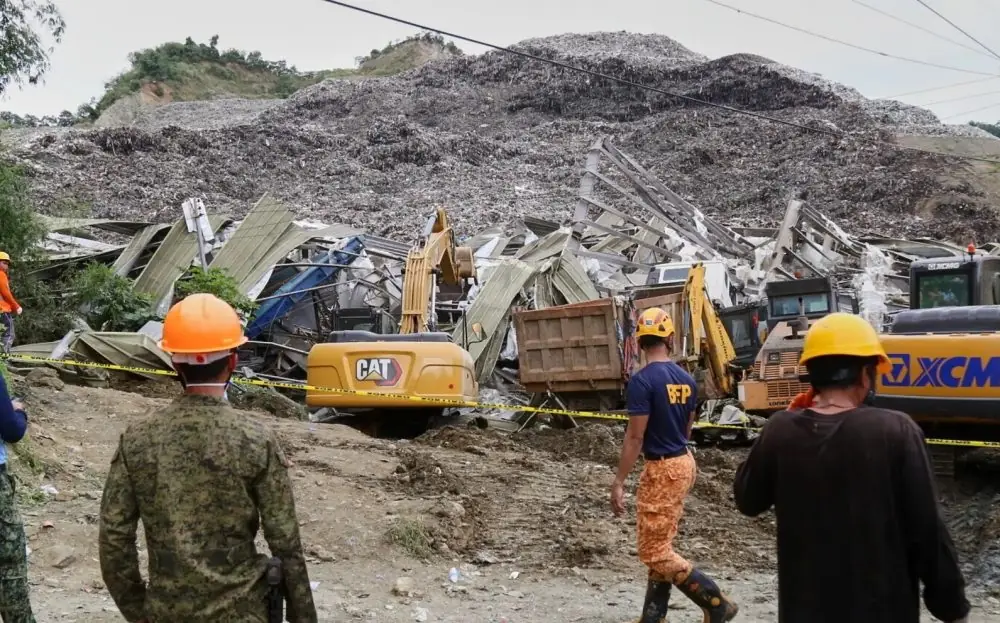
A massive garbage heap in Cebu City, Philippines, collapsed Thursday, claiming at least 28 lives and leaving several people unaccounted for. Families are left in shock, confronting grief after what began as an ordinary workday became a national tragedy.
The disaster has brought attention to questions about landfill safety and how fast-growing cities handle waste. Rescue teams continue to search through unstable piles of debris, and the human toll is still rising.
How the Cebu Landfill Collapse Unfolded
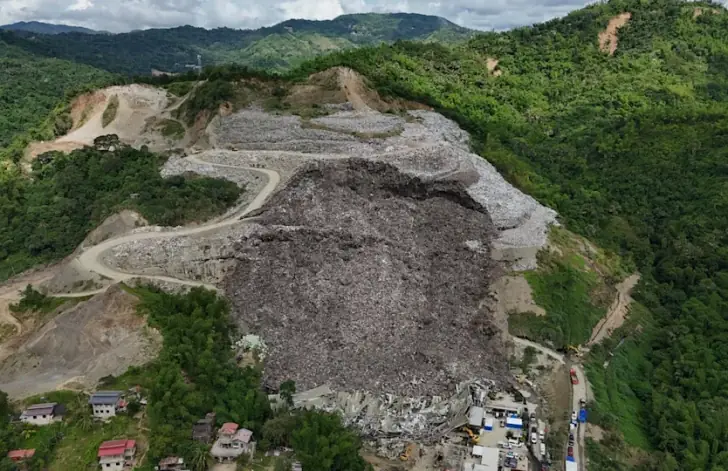
A massive wall of trash gave way without warning, crushing low-rise buildings where workers were on duty. Officials said the heap stood about four stories high and processed roughly 1,000 tons of trash daily. Survivors reported there was no time to react as the debris barreled down.
One worker described crawling through pitch darkness, following a faint light to escape.
Early reports were chaotic. Initial figures showed one confirmed death, several injuries, and dozens missing. Cebu City Mayor Nestor Archival later said more people had been pulled out alive, but as many as 38 were still unaccounted for. The confusion reflected the scale of the destruction and the dangers responders faced as they entered the site.
Rising Death Toll and Dangerous Rescue Efforts
As days passed, the grim numbers grew. By January 17, reports from local and international media confirmed at least 28 fatalities. Some government outlets listed 25 dead, showing how fast the situation kept changing. Recovery teams were finding bodies slowly, often buried deep beneath compacted waste.
Between 12 and 18 workers were rescued alive. At least 18 people remain hospitalized with serious injuries. The number of missing has dropped, but not disappeared. Officials believe between eight and eleven people may still be trapped, and hope is fading with each passing hour.
Rescue work has been brutal. Around 300 responders have been deployed, using cranes and heavy equipment to shift layers of trash. Toxic gases rise from the waste, and the ground remains unstable. Any wrong move could trigger another collapse. Crews briefly stayed in rescue mode after detecting signs of life, but conditions forced them to slow down.
What Caused the Collapse and Who Is Accountable?
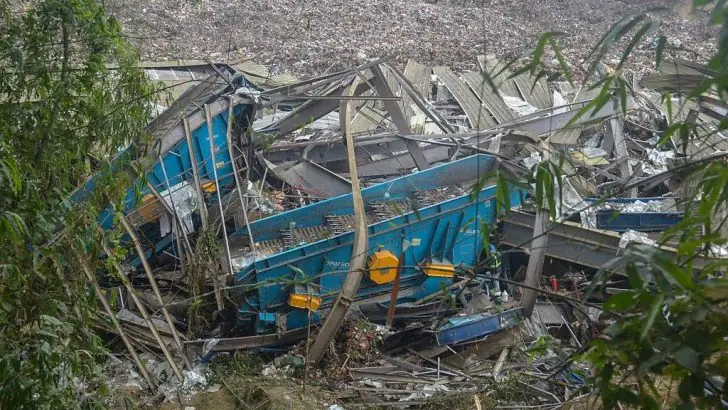
The company suggested that past earthquakes and heavy rains may have weakened the structure over time. They pointed to a strong quake in September 2025 and a typhoon in November as possible triggers.
That explanation did not convince everyone. Local police officials said there was no rain on the day of the collapse. Government investigators also flagged deeper issues. Early findings from the Mines and Geosciences Bureau pointed to oversaturation, weak engineering controls, and possible planning failures in the stacking of the waste.
The Department of Environment and Natural Resources issued a cease-and-desist order on January 12, shutting down the landfill. Operations will stay suspended until the company submits a compliance plan and clears the investigation. Philippine President Ferdinand Marcos Jr. promised a full and transparent probe, signaling pressure from the highest level.
However, for many Filipinos, this disaster feels hauntingly familiar. In July 2000, a massive garbage slide buried a shantytown at a landfill in Quezon City, killing more than 200 people. That tragedy sparked public anger and led to new waste management laws meant to prevent repeats.