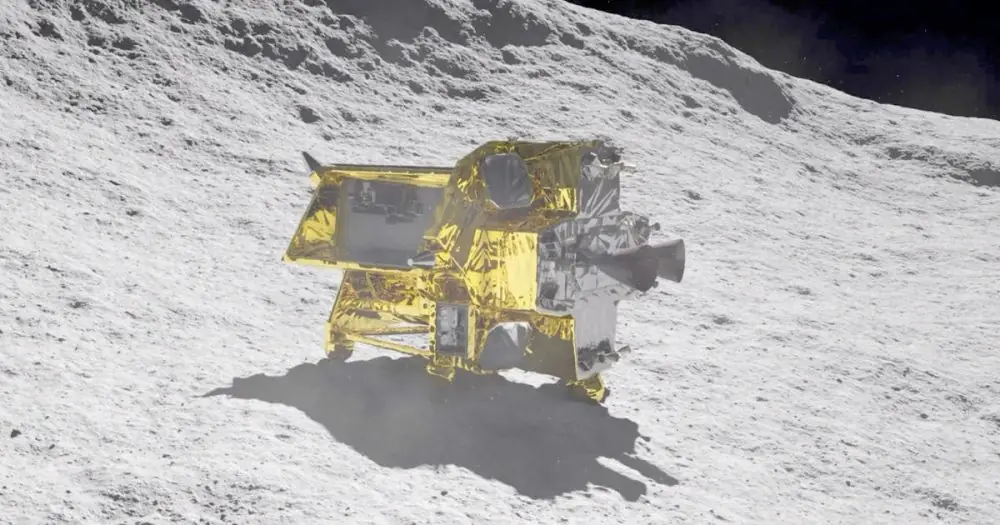
Japan’s moon landing has recently taken a dramatic turn, with the country’s robotic lander, SLIM (Smart Lander for Investigating Moon), experiencing a critical power issue that could end its mission prematurely. The SLIM lander successfully touched down on the Moon, marking Japan as the fifth nation to achieve a soft lunar landing.
Yet, soon after this historic touchdown, engineers discovered that SLIM’s solar power system was not generating electricity.
This unexpected obstacle has placed Japan’s ambitious lunar plans at a crossroads. For now, the lander operates solely on its batteries, with engineers working tirelessly to maximize the limited time available.
SLIM’s Moon Touchdown is a Historic Milestone!
Japan’s moon landing represents a monumental step in its space exploration journey. When the SLIM lander gently touched down on the Moon near an equatorial crater, it signaled a new era for the Japanese Aerospace Exploration Agency (JAXA).
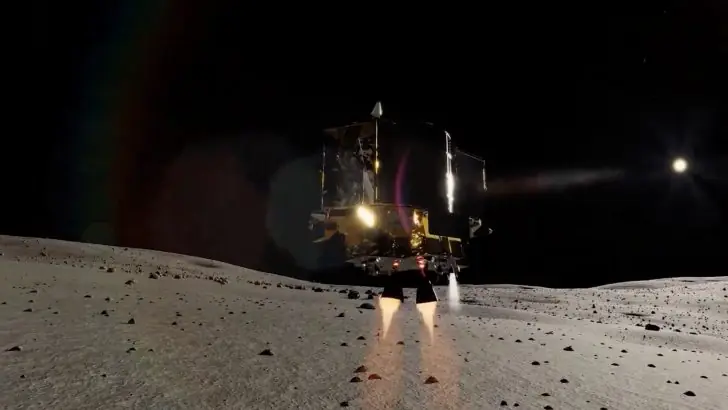
However, the SLIM mission’s primary goal was to showcase precision-landing technology, a capability crucial for future lunar and interplanetary missions. By demonstrating these navigation advancements, JAXA sought to contribute to a range of lunar and asteroid explorations. However, despite the mission’s flawless descent, the solar power glitch threatens to turn this milestone into a short-lived triumph.
The Glitch That Threatens Japan’s Moon Landing
Only hours after landing, JAXA engineers encountered an unsettling issue: SLIM’s solar cells were not generating electricity. Without a steady power source from solar energy, SLIM relies exclusively on its onboard batteries. While they can keep the lander operational temporarily, they are expected to deplete soon.
When they do, SLIM will be forced into silence, unable to send or receive signals from Earth.
The root cause of the solar cell failure remains unclear, though JAXA is investigating possible explanations. One theory is that the solar cells may be misaligned, unable to catch sunlight at the necessary angles. Another possibility is that lunar dust or a mechanical error may be obstructing power generation.
Is There A Second Chance?
While the power situation seems dire, JAXA engineers have not completely ruled out the possibility of SLIM’s revival. If the problem is indeed due to an orientation issue, it is conceivable that the changing angles of sunlight on the lunar surface could eventually realign SLIM’s solar cells, restoring power.
Lunar days last roughly two Earth weeks. So, a change in the sun’s position could offer SLIM a second chance.
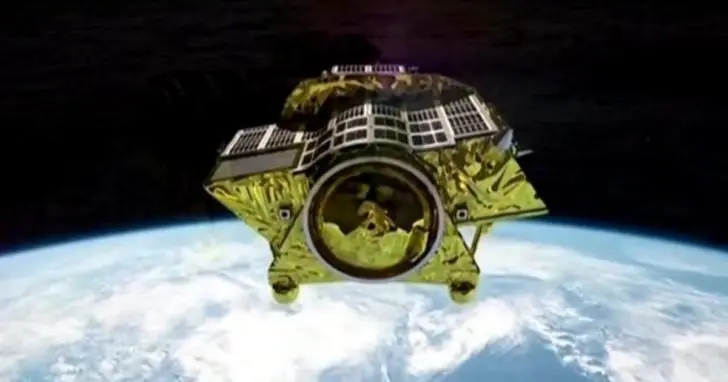
Although the stakes are high, the possibility of SLIM coming back online remains a faint glimmer of hope.
Japan’s Moon Landing and Its Significance in Space Exploration
Despite this setback, Japan’s moon landing remains a remarkable accomplishment. Achieving a soft lunar landing is notoriously challenging, with only half of all attempts ever succeeding. JAXA places its trust in advanced navigation software and imaging technology to avoid lunar hazards.
Japan’s success in touching down on the Moon is particularly noteworthy given its close cooperation with NASA on the Artemis program – which aims to send humans back to the Moon for the first time since the Apollo missions. This lunar partnership allows Japan to showcase its technological prowess and solidify its role in upcoming international space missions.